

Last updated October 31, 2026
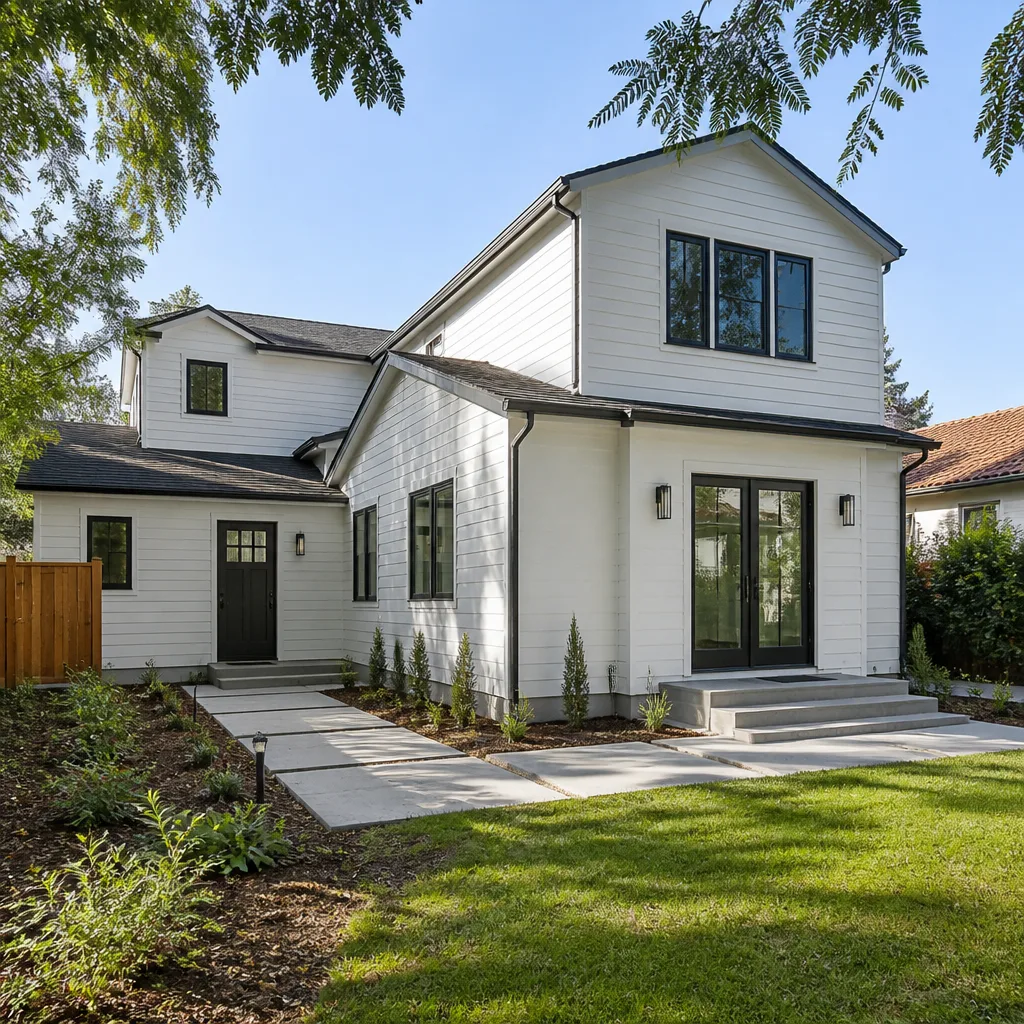 Home additions & ADU
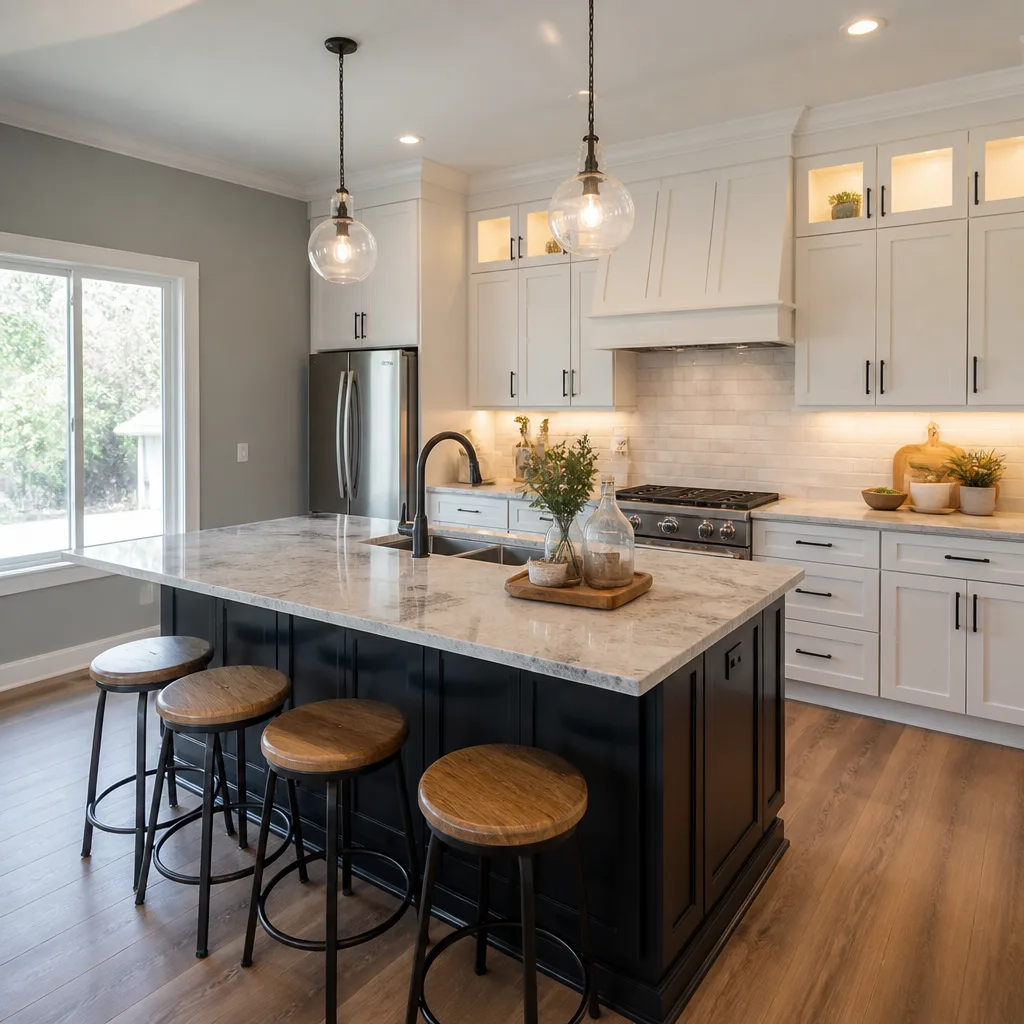 Kitchen remodeling
 Bathroom remodeling
 Roofing
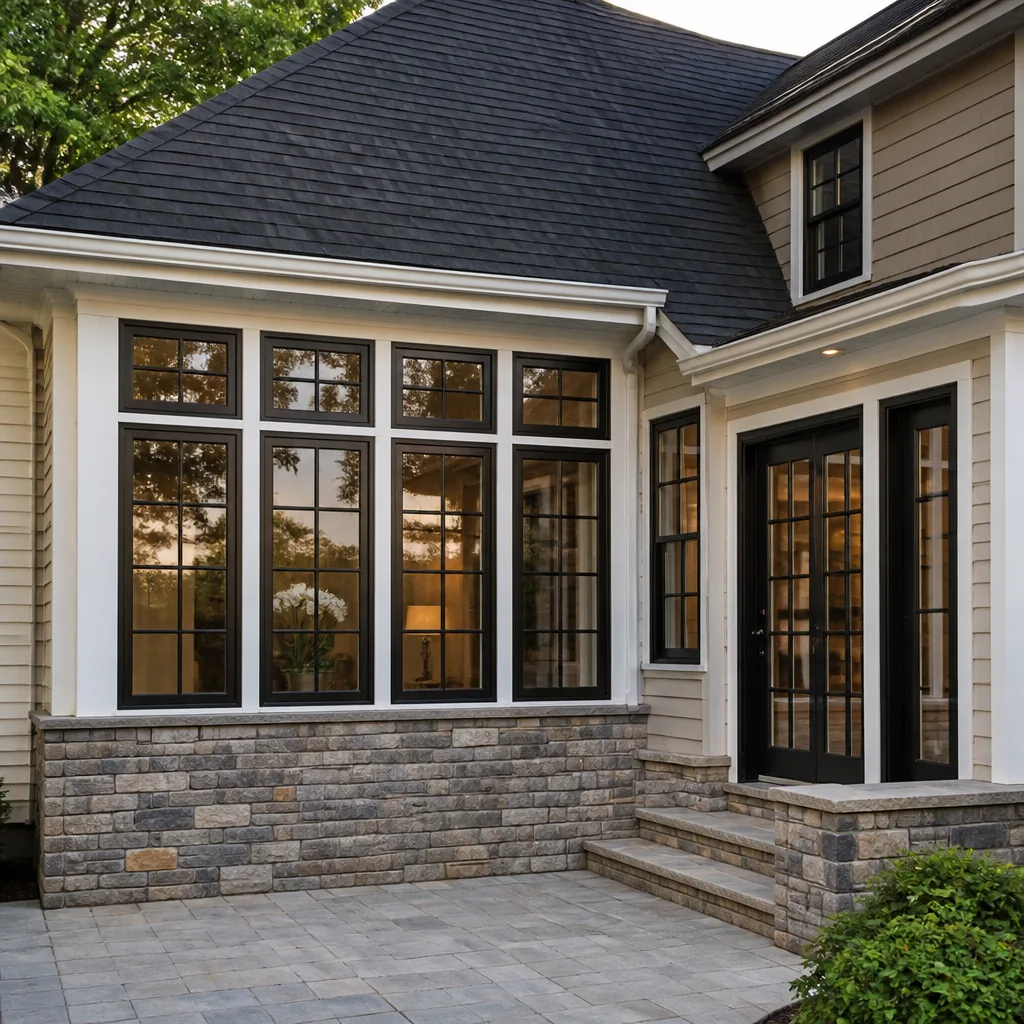 Windows & doors
 Driveway & pavers
 Fence
Free written scope consultation - allowances, timeline, and change-order rules on paper before a single trade is scheduled
DIY vs Professional Construction: The Santa Ana Homeowner’s Decision Guide
In Santa Ana, a city where roughly 68% of homes were built before 1980, the DIY-versus-hire-a-pro question hits differently than in newer developments like Irvine or Tustin. Older framing, outdated wiring, cast-iron plumbing, and decades of previous homeowner “fixes” hide behind walls that look perfectly fine from the living room. This guide and our more guides & resources give you a clear, honest framework for deciding which projects you can tackle yourself in Santa Ana, which demand a licensed contractor, and where the line between saving money and creating a six-figure liability actually sits. By the end, you’ll know exactly which category your next project falls into and why.
Styles & brands we work with
Quick Answer
In Santa Ana, you can legally handle cosmetic work like painting, trim, flooring, and fixture swaps yourself, but California law requires a licensed contractor for any project involving structural changes, load-bearing walls, major electrical, plumbing, or HVAC work unless you act as an owner-builder pulling your own permits. The real decision isn’t about skill, it’s about liability: unpermitted DIY work can derail a home sale, void insurance claims, and trigger mandatory remediation. For anything beyond cosmetic finish work, hiring a Framework Contractors home professional usually costs less than the hidden risk of getting it wrong.
Table of Contents
- California Owner-Builder Rules in Santa Ana: What You Can Actually Do Yourself
- The Three Categories: DIY-Viable, DIY-Risky, and Legally-Requires-Licensed-Labor
- The Hidden Cost of DIY in Santa Ana’s Older Homes
- How DIY Work Affects Homeowner’s Insurance Claims in California
- The Honest Cost-Benefit Framework: Where Hiring a Pro Saves Money
- Santa Ana-Specific Code, Climate, and Market Factors
- Common Mistakes to Avoid
- When to Call a Professional
- Frequently Asked Questions
- The Bottom Line
California Owner-Builder Rules in Santa Ana: What You Can Actually Do Yourself
California is one of the few states that explicitly allows homeowners to act as their own general contractor. Under the owner-builder exemption in Business and Professions Code section 7044, you can pull permits, hire subcontractors, and perform work on your own primary residence as long as you occupy or intend to occupy the home. Santa Ana enforces this through the city’s Building Safety Division, which processes owner-builder permits the same as contractor permits, with the same plan-check requirements, inspection schedules, and fee structure.
Here’s what the owner-builder path actually allows:
- You can pull permits for your own home. The Santa Ana permit counter will accept owner-builder applications for remodels, additions, and renovations on the property you live in.
- You can hire subcontractors directly. As an owner-builder, you become the general contractor, meaning you schedule, coordinate, and pay electricians, plumbers, and framers yourself. Each sub still needs their own license for their trade.
- You are legally responsible for worker injuries. This is the part most people miss. As an owner-builder, if a worker you hired gets hurt on your Santa Ana job site and your sub doesn’t carry adequate workers’ compensation, the claim lands on you personally. Contractors carry this coverage as a matter of licensing; owner-builders typically do not.
- You cannot use the owner-builder exemption to flip or rent the property. If you build as an owner-builder and sell within one year, California law presumes you were acting as an unlicensed contractor, which carries penalties. Santa Ana sellers who finish an owner-builder remodel and list shortly after can face disclosure complications.
The owner-builder path works for homeowners with deep construction knowledge, time to manage inspections, and tolerance for weeks or months of coordination. It is a real legal route. It is not a shortcut around hiring professionals; it’s a decision to become the professional on a project-by-project basis.
The Three Categories: DIY-Viable, DIY-Risky, and Legally-Requires-Licensed-Labor
We’ve organized Santa Ana remodel and renovation tasks into three buckets based on California law, Santa Ana code enforcement patterns, and what we’ve seen fail in the field across Orange County. Use this as a decision filter before you pick up a hammer or pick up the phone.
Category 1: DIY-Viable (Low Risk, No Permit Usually Required)
These are surface-level projects where a careful homeowner with decent tools and a willingness to learn can genuinely save money. They don’t touch structure, electrical, plumbing, or load-bearing elements.
- Interior painting – Santa Ana’s dry climate means latex paint cures predictably. Figure $400-$900 in materials for a 1,200-square-foot home when you do it yourself.
- Trim and baseboard replacement – Straightforward miter cuts and finish nailing. Pre-primed MDF from any Santa Ana lumberyard works fine in most dry interior conditions.
- Fixture swaps – Replacing a faucet, a light fixture, or a toilet yourself is legal as long as you’re not touching the supply lines’ rough-in or the electrical wiring behind the box. Shut off the breaker, shut off the angle stops, and work slowly.
- Flooring – Luxury vinyl plank and engineered click-lock flooring are genuinely DIY-friendly. Santa Ana homes with slab foundations (common in neighborhoods like Floral Park and Washington Square) are actually easier DIY projects than raised-foundation homes because there’s no subfloor deflection to account for.
- Cabinet hardware and soft-close retrofits – Dimensional consistency from brands like KraftMaid and Wellborn means swapping hinges and drawer slides is a low-stakes upgrade on existing cabinetry.
- Caulking, weatherstripping, and exterior trim touch-up – Cheap, fast, and genuinely effective in Santa Ana’s hot, dry summers.
These projects account for maybe 10-15 percent of what a full renovation requires. They’re real savings, but they’re not the bulk of the work in a typical Santa Ana remodel.
Category 2: DIY-Risky (Legal But Stupid to Get Wrong)
These tasks fall into a gray zone. You can legally do them as an owner-builder, but the failure cost is high enough that the calculation shifts. A botched Category 2 project doesn’t just look bad; it creates compounding damage that costs multiples of the original project to fix.
- Tile showers and tub surrounds – Waterproofing is the real job, not tile. A tile shower that leaks behind the cement board in a Santa Ana home can feed mold for years before you notice. Fixing a failed DIY shower waterproofing job typically costs $8,000-$15,000 by the time you demo, remediate, and rebuild.
- Window replacement – Santa Ana’s stucco exterior complicates window flashing. A poorly flashed window leaks into the wall cavity, rots the framing, and shows zero visible evidence for months. Impact-rated windows from manufacturers like PGT require precise installation to maintain their warranty.
- Hardscape and pavers on clay soil – Santa Ana sits on expansive clay. Pavers installed without proper base compaction and edge restraint drift within two years. Correcting a failing paver patio means full teardown and reinstallation; there’s no spot-fixing a poorly built base.
- Drywall hanging and finishing – This one’s legal and people attempt it constantly. The result is usually visible seams, wavy corners, and a finish that reads as “DIY” from across the room. Drywall is cheap; fixing bad drywall work is messier than starting from scratch.
- Fence installation – Post depth and concrete footing matter in Santa Ana because of clay-soil expansion. A fence that leans after one winter is a common sight in older Santa Ana neighborhoods.
Category 3: Legally-Requires-Licensed-Labor (Do Not DIY, No Gray Area)
California Business and Professions Code section 7026 requires a licensed contractor for any project exceeding $500 in combined labor and materials when the work involves a trade that requires licensure. More importantly, the City of Santa Ana enforces the California Building Code, which requires that the following categories of work be performed by a California-licensed contractor (or, in rare cases, by an owner-builder who has passed the same plan-check bar):
- Structural work – Load-bearing wall removal, beam installation, foundation repair, seismic retrofit. These require engineering calculations and plan submission to Santa Ana’s Building Safety Division. A failed structural modification can make a home unsellable and, in the worst case, unsafe to occupy.
- Electrical panel work and circuit additions – Santa Ana homes built before 1980 frequently have 100-amp service or earlier panels like Federal Pacific or Zinsco, both of which are known fire hazards. Rewiring requires a C-10 electrical license, and Santa Ana inspectors are specific about panel clearance, grounding, and arc-fault requirements.
- Plumbing rough-in and repiping – Cast-iron drain lines in older Santa Ana slabs fail from the inside out. Repiping requires a C-36 plumbing license. The city’s inspection process covers pressure testing, slope, and fixture-unit calculations that DIY work rarely passes on the first try.
- HVAC system installation or relocation – C-20 license required. Santa Ana’s cooling demand is real; a wrong-size HVAC system leads to short cycling, mold in ductwork, and utility bills that climb every summer.
- Roofing – A C-39 roofing license is required for any roofing work in California. Santa Ana’s occasional Santa Ana winds punish poorly fastened shingles. Manufacturers like James Hardie and major shingle brands void warranties when installation isn’t performed by a licensed contractor.
- ADU construction – Santa Ana has permitted a wave of ADUs under California’s ADU laws, but the city still requires full plan-check and licensed contractor involvement for structural, electrical, plumbing, and mechanical work. Prefab options from companies like Tuff Shed handle the shell, but the site work, utility connections, and foundation fall under Santa Ana permitting rules.
This is the category where most Santa Ana homeowners underestimate the risk. It’s not that you can’t learn how to do it. It’s that by the time you’ve learned enough to do it correctly, you’ve spent more time and money than hiring someone who already knows.
The Hidden Cost of DIY in Santa Ana’s Older Homes
Santa Ana’s housing stock is old. The city incorporated in 1869, and many neighborhoods, from French Park to Park Santiago to the areas around Santa Ana College, feature homes built in the 1920s through 1960s. That age carries a specific set of discovery risks that make DIY projects far more expensive than they look at the starting line.
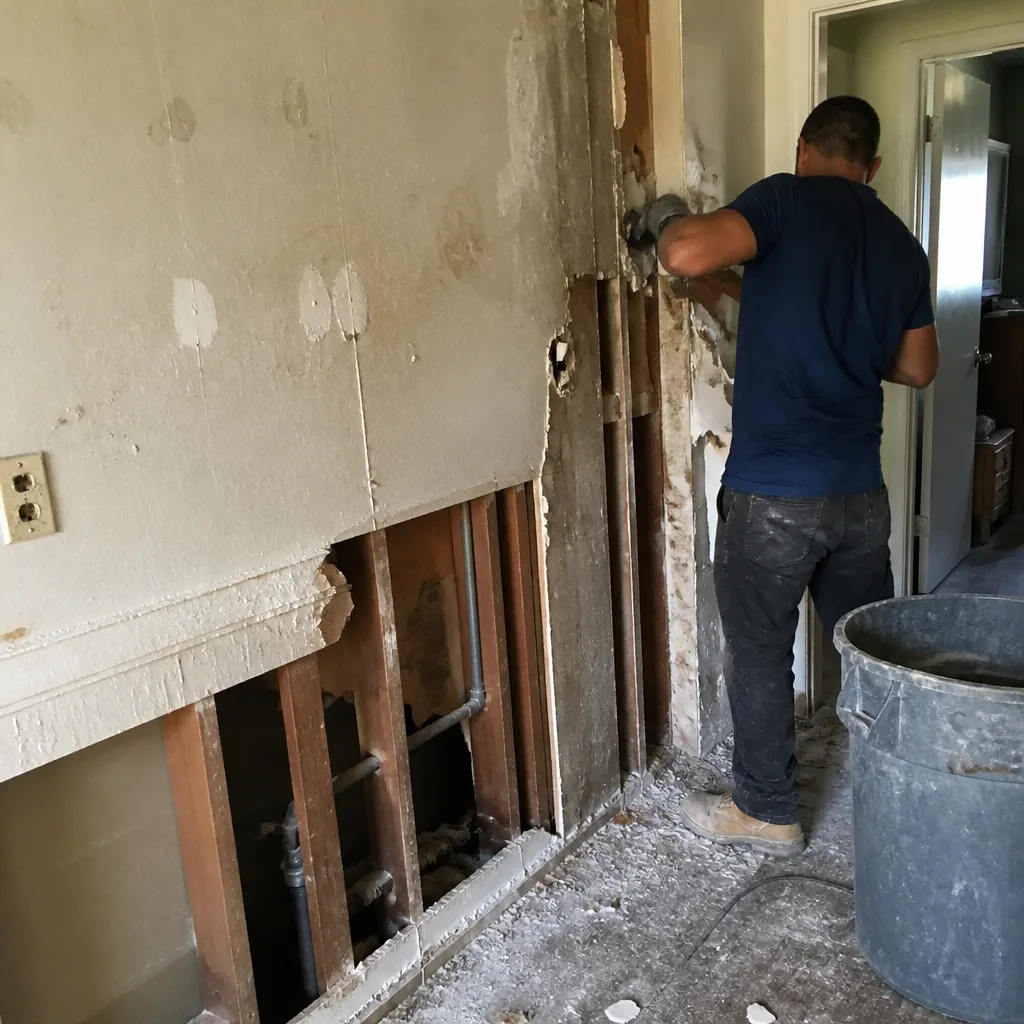
Here’s what we consistently see when walls come open in older Santa Ana homes:
- Undersized and deteriorated framing – Pre-1960 Santa Ana homes often have 2×4 rafters spanning distances that would never pass code today. Opening a wall for a simple window replacement can reveal a header that doesn’t exist or is failing. That’s an immediate stop-work situation requiring a structural engineer and a licensed contractor.
- Knob-and-tube or cloth-insulated wiring – We’ve opened walls in Santa Ana bungalows and found wiring that predates modern electrical code by fifty years. Legally, once you open that wall, Santa Ana code requires you to address the conditions you find. Ignoring it doesn’t just violate code; it creates a real fire risk.
- Cast-iron drain lines on their last legs – Santa Ana slab foundations hide cast-iron waste lines that corrode from the inside. A DIY bathroom remodel that disturbs one of these lines can trigger a slow leak under the slab that goes unnoticed until the floor tile starts cupping and the smell arrives.
- Asbestos in flooring, texture, and insulation – Homes built before 1978 in Santa Ana commonly contain asbestos in vinyl floor tile, popcorn ceiling texture, and pipe insulation. Removing these materials yourself is legal in California only under specific conditions, and improper removal creates a serious health hazard.
- Termite damage in older framing – Santa Ana’s warm climate and older wood framing make termite damage common. A DIY project that finds termite-compromised headers means you’re now dealing with structural repair, not the finish work you planned.
Each of these discoveries transforms a “simple” DIY project into a licensed-contractor job with permits and inspections. The homeowner who planned a $3,000 DIY bathroom refresh suddenly faces a $25,000 structural and plumbing remediation. The DIY savings evaporate, and the project timeline extends by weeks or months.
How DIY Work Affects Homeowner’s Insurance Claims in California
This is the section most DIY guides skip, and it’s the one that costs Santa Ana homeowners real money. Your homeowner’s insurance policy is a contract, and that contract contains exclusions and limitations that interact with self-performed work in specific ways.
How DIY work intersects with your California insurance policy:
- Water damage from self-performed plumbing or waterproofing work may be denied. If you installed a shower pan yourself, didn’t pull a permit, and it leaks, your insurer can deny the claim on the basis that the work was unpermitted and improperly performed. We’ve seen this exact scenario in Orange County.
- Electrical fire claims get scrutinized after owner-builder work. If a fire originates in a circuit you modified without a permit, the insurer’s investigation will identify the unpermitted work and can reduce or deny the payout. Even when claims aren’t denied outright, the payout is often reduced to account for the improper work.
- Workers’ compensation exposure on your own DIY project. If you hire a day laborer to help with a roof tear-off or a demolition and they’re injured, your homeowner’s policy likely excludes coverage for workers you’ve paid. You become personally liable. A licensed contractor carries workers’ compensation; an owner-builder typically does not.
- Unpermitted additions or remodels can void coverage for that structure. Some California insurers will exclude coverage on unpermitted square footage. If you built an enclosed patio without permits and it burns, the payout may cover only the permitted portion of the structure.
- Disclosure obligations when you sell. California requires sellers to disclose unpermitted work. Santa Ana buyers increasingly demand permits are cleared before closing. An unpermitted DIY remodel can kill a sale or force a price reduction far larger than what a licensed contractor would have cost originally.
The insurance reality is simple: when a licensed contractor performs permitted work in Santa Ana, the permit and inspection record creates a paper trail that protects you. When you do the work yourself without a permit, that paper trail doesn’t exist, and the risk lands on you.
The Honest Cost-Benefit Framework: Where Hiring a Pro Saves Money
Hiring a professional contractor doesn’t always save you money. That’s the honest truth, and any contractor who tells you otherwise is selling something. The value of professional work shows up in specific places and under specific conditions. Here’s a straight framework, or see our General Contractor Troubleshooting: Common Problems and How to Fix Them for deeper problem-solving guidance.
Where DIY genuinely saves money (and you should do it):
- Painting – A professional paint job on a 1,500-square-foot Santa Ana home runs $6,000-$10,000. DIY material cost is $800-$1,500. The labor is tedious but low-risk. DIY wins.
- Light fixture swaps – Rewiring a fixture replacement that uses the existing box costs $150-$300 per fixture professionally. The parts cost $30-$100. DIY wins, assuming you’re comfortable turning off the breaker.
- Cabinet hardware, interior door replacement, and baseboard trim – The professional markup on these finish trades is real. If you have patience and a mitre saw, DIY wins.
Where professional work saves money (DIY is a false economy):
- Anything behind a wall – Plumbing, electrical, structural, and waterproofing work. The cost of fixing a DIY failure in these categories runs 3-4x the cost of doing it right the first time. Professional wins overwhelmingly.
- Window and door replacement – Improper flashing on a Santa Ana stucco home creates a slow wall leak. By the time it’s visible, the damage is extensive. The warranty on the windows is void, and the repair is costly. Professional wins.
- Major kitchen and bath remodels – A full kitchen remodel from a General Contractor in Costa Mesa-style partner like Framework involves cabinet installation from brands like KraftMaid, countertop templating, plumbing rough-in moves, electrical additions, and flooring transitions. The coordination complexity is the job. Trying to owner-build a full kitchen is a part-time job for six months.
- Any project involving a permit – Permitted work requires plans, inspections, and code compliance. The first Santa Ana inspection a DIY project fails costs you the delay, the rework, and the reinspection fee. Professional contractors navigate this weekly.
The honest rule: if the cost of failure is cosmetic, DIY saves money. If the cost of failure is structural, water-damage-related, or fire-related, professional construction is the cheaper option every time, even when the initial quote looks higher.
Santa Ana-Specific Code, Climate, and Market Factors
Santa Ana isn’t just another Orange County city for construction purposes. Several local factors change the DIY-versus-pro calculation in ways that don’t apply in, say, Huntington Beach or Anaheim.
Santa Ana’s Permitting Reality
The City of Santa Ana Building Safety Division processes residential permits through a plan-check system that mirrors the state code. For a kitchen or bath remodel with plumbing or electrical changes, you’ll need to submit plans for review, pay permit fees, and schedule inspections at rough and final phases. An experienced Santa Ana contractor does this in their sleep. A first-time owner-builder learns the process in real time, and mistakes mean weeks of delay. If you’re unsure how to vet your pro, read our How to Hire a Construction Contractor in Santa Ana: A Step-by-Step Guide first.
The Weather Factor
Santa Ana’s hot, dry summers and mild winters mean exterior work has a long window, but the dry heat creates specific conditions. Wood framing in Santa Ana attics dries out and becomes brittle over decades, which affects how it takes fasteners. The Santa Ana winds that give the city its name arrive in the fall and can stress roof installations, fence posts, and hardscape edges. Building techniques that work in coastal cities with marine-layer humidity don’t always transfer directly to Santa Ana’s inland climate.
The Housing Stock
Santa Ana’s older neighborhoods, from French Park’s historic homes to the bungalow-heavy tracts near Edinger and Bristol, require contractors who understand pre-1960 construction. Lath-and-plaster walls, balloon framing, original hardwood floors, and foundation types that vary block to block, not just neighborhood to neighborhood. A Home Remodeling in Costa Mesa expertise base translates well to Santa Ana’s older stock because both cities share similar 1960s-era tracts, but Santa Ana’s housing stock skews older and more varied.
The Resale Market
Santa Ana real estate moves, and buyers in the current market are more inspection-savvy than ever. Flipped homes with visible DIY work read instantly to a trained inspector, and those inspection reports drive negotiations. Permitted, professionally performed renovations with a paper trail command stronger offers and faster sales. Unpermitted DIY work routinely knocks $10,000-$50,000 off a Santa Ana sale price when the inspection report lands.
Common Mistakes to Avoid
- Pulling an owner-builder permit to act as an unlicensed contractor. The owner-builder exemption only applies to work on a home you own and occupy. Using it to build a spec remodel or to manage work for a friend’s house exposes you to legal and financial liability far beyond the project’s scope.
- Starting demo before checking for asbestos or lead. Santa Ana’s pre-1978 housing stock requires testing before disturbing walls, floors, or ceilings. Skipping this step creates a health hazard and an expensive abatement you didn’t budget for.
- Trusting that “it’s just a wall” without checking if it’s load-bearing. In older Santa Ana homes, walls that don’t look structural sometimes are. A load-bearing wall removal without permits and a header beam is a structural failure waiting to happen.
- Buying materials before confirming Santa Ana code requirements. Santa Ana’s energy code and specific green-building requirements (CalGreen) apply to permitted remodels. Buying a water heater or furnace that doesn’t meet current California efficiency standards means returning it or installing something that fails inspection.
- Hiring unlicensed subcontractors to save money on an owner-builder project. In California, an unlicensed sub who damages your property or gets injured on your job site creates liability that can exceed the entire project budget. Santa Ana requires that any contractor working on your home hold a current California license for their trade.
- Assuming your homeowner’s policy covers your DIY work. It often doesn’t, especially for water damage and fire claims involving unpermitted work. Read your policy’s exclusions before you start the project, not after the claim is filed.
- Selling a flipped DIY remodel without clearing the permits. Santa Ana buyers and their lenders increasingly require permit sign-offs before closing. Unpermitted work discovered during escrow becomes an emergency negotiation that favors the buyer.
When to Call a Professional
You should call a Home Renovation in Costa Mesa-caliber professional any time the project involves structural changes, electrical panel work, plumbing rough-in, HVAC, roofing, or anything with a permit requirement in Santa Ana. You should also call when you open a wall and find something the previous homeowner left behind that doesn’t look right. We’ve replaced entire sections of framing, repiped buried cast-iron lines, and rewired panels that looked fine from the outside and were fire hazards inside. Framework Contractors offers free estimates in Santa Ana, and we’re happy to walk through your project scope before you commit to doing it yourself. Call (844) 681-3590 and we’ll tell you honestly whether a project is DIY-viable or needs a licensed hand.
Frequently Asked Questions
For true finish work like painting and trim, DIY costs 50 to 70 percent less than professional labor. For permitted work involving electrical, plumbing, or structural changes, a failed DIY attempt typically costs three to four times the original professional quote once you factor in remediation, reinspection fees, and permit clearing. Our General Contractor Maintenance Checklist for Santa Ana Homeowners can help you stay ahead of costly surprises. Call (844) 681-3590 for an exact quote on your project, and we’ll help you classify the work before you start.
If you’re only swapping fixtures, flooring, and paint in the same locations, no permit is typically required. If you’re moving plumbing, adding a circuit, changing the layout, or altering any wall, Santa Ana requires a permit and plan-check. Skipping the permit saves money today and creates a disclosure problem when you sell.
California law requires you to disclose unpermitted work to buyers, and Santa Ana buyers increasingly request permit history before closing. Unpermitted work that surfaces during inspection typically leads to a price reduction, a repair credit, or a buyer walking away entirely. Clearing a permit retroactively is always more expensive than pulling it before the work starts.
Legally, yes, if you own and occupy the home. Practically, a full kitchen remodel involves electrical, plumbing, cabinetry, countertop templating, and finish work that requires extensive coordination. Owner-builders who attempt a full kitchen typically spend six to twelve months on a project a licensed contractor completes in eight to ten weeks. The time cost alone usually erases the savings.
Not necessarily. If the damage resulted from unpermitted, improperly performed work, your California insurer can deny or reduce the claim. This is especially true for water damage claims involving self-installed shower pans, sinks, or water lines. Licensed contractor work carries better documentation for claims because the permit and inspection record exists.
Tile shower waterproofing, without question. The tile looks fine until it doesn’t, and by the time the leak shows in the room below or the adjacent wall, the damage is extensive. Rebuilding a failed DIY shower waterproofing job costs $8,000 to $15,000 in Santa Ana depending on the extent of the mold and framing damage. Call (844) 681-3590 if you’re mid-project and wondering if what you’ve done so far is going to hold up.
The Bottom Line
The DIY-versus-professional decision in Santa Ana isn’t a question of how skilled you are. It’s a question of what the law requires, what your insurance covers, what a failed attempt costs to fix, and what the Santa Ana real estate market does to homes with unpermitted work. Paint your own walls. Swap your own fixtures. Lay your own click-lock flooring. But when the project touches structure, electrical, plumbing, roofing, or anything behind the wall, hire a licensed contractor. The money you save on the front end is not worth the liability you inherit on the back end. Framework Contractors works across the full envelope of the home, from the roof down to the foundation, and we’re one phone call away for a free estimate at (844) 681-3590.
Written by the team at Framework Contractors, serving Santa Ana since 2015.
See the difference
 Before
 After
 Before
 After
 Before
 After