

Last updated October 31, 2026
 Kitchen remodeling
 Bathroom remodeling
 Home additions & ADU
 Roofing
 Windows & doors
 Driveway & pavers
 Fence
Free written scope consultation - allowances, timeline, and change-order rules on paper before a single trade is scheduled
General Contractor Troubleshooting: Common Problems and How to Fix Them
A contractor going “radio silent” mid-project is almost never a communication style problem. It’s a cash flow problem. The contractor has spent your progress payment on the last job’s materials, or the last job’s subcontractors, or both, and now they cannot afford to keep your crew working. Knowing that changes exactly how you respond. This guide diagnoses the actual source of the ten most common contractor problems and gives you the specific language and leverage to fix them. In Santa Ana, where we’ve been contracting since 2015, we’ve watched homeowners spend months treating symptoms while the root cause sat in a contract clause they never knew they had. By the end of this guide, you’ll know what to look for, what to ask, and when to stop asking and start documenting. For more guides & resources, visit our blog.
Quick Answer
Most general contractor problems trace back to three root causes: an undercapitalized contractor who cannot float material and labor costs between draws, a contract that protects the contractor’s schedule instead of the homeowner’s completion date, or a scope of work so vague that every material choice becomes a change order. The fix is almost always the same: get the contract language right before work starts, track documentation during the job, and respond to early warning signs, payment delays, unanswered texts, skipped inspections, within days rather than weeks.
Styles & brands we work with
Table of Contents
- How to Diagnose a Schedule Delay: Materials, Sequencing, or Over-Booking
- The Contract Clauses That Give You Real Leverage
- First 48 Hours: What to Do When Work Stops Unexpectedly
- Cost Overruns: Legitimate Change Orders vs. Low-Bid Recovery
- Subcontractor Problems and How a Single-Source GC Prevents Them
- When a GC Abandons the Job: Your Options in Santa Ana
- Material Substitution: How to Spot It and Stop It
- Payment Schedules That Protect You From the Start
- Common Mistakes to Avoid
- When to Call a Professional
- Frequently Asked Questions
- The Bottom Line
How to Diagnose a Schedule Delay: Materials, Sequencing, or Over-Booking
Schedule delays happen on almost every project. The question is why. There are three distinct causes, and each requires a different response. Misdiagnosing the cause means applying the wrong fix and burning weeks you do not have.
Material lead times are the most legitimate cause and the easiest to verify. A window order from PGT or CGI in Florida takes 8 to 14 weeks depending on impact rating and size. Custom cabinetry from a line like KraftMaid runs 6 to 10 weeks. Cambria countertops are fabricated to template and typically scheduled 3 to 4 weeks out. If your GC tells you materials are holding up the job, ask for the purchase order date and the manufacturer’s current lead time quote. A legitimate delay has paper behind it. No paper, no delay.
Subcontractor sequencing failures are a contractor management problem. Drywall cannot be hung before rough electrical and plumbing inspections pass. Tile cannot be set before the subfloor is leveled and waterproofed. When subs show up out of order or not at all, it means the GC did not coordinate the schedule or the GC has a weak relationship with their trade partners. In Santa Ana, where the permitting pipeline through the city’s building department adds its own timing layer, sequencing mistakes compound fast. One missed inspection resets the calendar for every trade behind it.
Over-booking is the hardest truth to hear and the most common. Many contractors take on more projects than their crews can service, then rotate labor between jobs to keep every client just satisfied enough not to fire them. The tell: your job is active Monday and Tuesday, dead Wednesday through Friday, active again Monday. Another tell: the same project manager is “on another site” every time you call. You fix an over-booking delay with a written demand for a revised schedule of values and a completion date. You fix it legally with a substantial completion clause, which we cover below.
Home renovation timelines in Costa Mesa face many of the same sequencing and material constraints we see across Orange County, and the same diagnostic logic applies.
The Contract Clauses That Give You Real Leverage
Most homeowners sign a contractor’s standard contract without reading past the price. That is the single most expensive mistake in residential construction. Three clauses, written correctly, change the power dynamic entirely. Here is what they are and why they matter.
- Substantial completion date. This is the date the project is usable for its intended purpose, even if minor punch-list items remain. Without it, the contractor has no contractual deadline at all. A contract that says “completion within a reasonable timeframe” means whatever the contractor wants it to mean. The clause should specify the date and the consequence for missing it, usually a per-day liquidated damage amount or a defined make-up schedule.
- Lien waiver schedule. Every time you make a payment, you should receive a conditional lien release from the contractor and, ideally, from each subcontractor and material supplier who has been paid from that draw. Without lien waivers, a subcontractor who never got paid by your GC can place a mechanic’s lien on your home, even though you paid the GC in full. In California, that lien can force a sale of the property to satisfy the debt. This is not a theoretical risk. It happens in Santa Ana with regularity on mid-size remodels.
- Change order approval windows. A legitimate change order should be in writing, priced line-by-line, and approved by you before work proceeds. The clause should state that no verbal authorization is binding and that any work performed without a signed written change order is done at the contractor’s expense. Without this clause, “we discussed it on the phone” becomes a $4,000 surprise at the final draw.
When we write contracts for full-scope projects, from home remodeling in Costa Mesa to whole-home renovations, these three clauses are non-negotiable. Any contractor who resists them is telling you how they intend to run the job.
First 48 Hours: What to Do When Work Stops Unexpectedly
Work stops. Crews don’t show. Calls go to voicemail. Your first 48 hours determine whether you fix a temporary scheduling glitch or spend the next six months in a dispute. Here is the sequence to follow.
- Document everything immediately. Photograph the job site exactly as it stands. Note the date, time, and what was installed or left incomplete. Save every text and email with the contractor. Start a written log of every call attempt, including time and response. This record is what a CSLB complaint, an attorney, or a mediator will ask for on day one.
- Send a written demand for communication. Email or text the GC with a specific question: “Work stopped on [date]. Please provide a written explanation and a revised schedule within 48 hours.” This is not aggressive. It is establishing a paper trail. Contractors who intend to finish the job will respond with a real answer.
- Check the permit status. If your project requires permits through the City of Santa Ana, call the building department or check online to see the inspection history. A stopped job with no failed inspection means the contractor chose to stop. A stopped job with a red-tagged inspection means there is a code issue the contractor has not fixed. You need to know which one you are dealing with.
- Hold the next payment. Do not release another draw until you have a written explanation and a revised schedule. Payment is your only real leverage mid-project. If the contractor is over-booking or undercapitalized, the only thing that gets their attention is the money you have not yet paid.
- Decide on the CSLB versus civil remedies. The California Contractors State License Board handles licensing violations: unlicensed work, abandonment, failure to pull permits, deposit violations. Civil court handles money disputes, breach of contract, defective work. They are different tracks. Most homeowners need the CSLB first because a complaint can trigger a mandatory investigation and, in some cases, restitution from the contractor’s license bond.
If work stops because the relationship has already broken down, hiring a general contractor in Costa Mesa to take over a half-finished job is expensive. Completion contractors charge a premium, anywhere from 15% to 30% above normal rates, because they inherit unknown conditions and someone else’s mistakes. This is the strongest argument for choosing a financially stable, single-source contractor from the start.
Cost Overruns: Legitimate Change Orders vs. Low-Bid Recovery
Cost overruns fall into two categories. The first is legitimate: you changed your mind, the project scope grew, or the walls revealed something no one could have predicted. The second is not legitimate at all: the contractor intentionally bid the job low enough to win it, knowing that change orders and allowances would make up the difference once you were committed. Learning to tell them apart is not hard once you know what the paper trail looks like.
Legitimate change orders come with a written description of the changed condition, photos or documentation of what was found, a line-item price breakdown for labor and materials, and a request for your approval before work proceeds. The framing was rotted behind the drywall. The slab has a crack that requires epoxy injection. These are real discoveries, and they are priced as specific line items.
Low-bid recovery looks different. The “allowance” for tile was set at $3 per square foot when the cheapest tile you actually selected costs $9. The plumbing fixture allowance covers builder-grade Moen when you were told the price included mid-tier Grohe. The “unforeseen electrical upgrade” appears in week two for a panel that any licensed electrician, walking the house before the bid, would have flagged. The tell in every case: the overrun appears early, it is vague, and it ties to an allowance or an “upgrade” rather than a discovered condition.
In Santa Ana’s housing stock, where many homes date to the 1950s and 1960s, discovered conditions like outdated wiring, cast-iron drain lines, and undersized structural members are genuinely common. That is why the estimate process matters so much. A contractor who spends a full hour in your attic and crawlspace before quoting will have already found the expensive surprises. A contractor who bids from the curb will find them after you’ve signed.
Our approach at Framework Contractors is to write bids that are fully specified, with named brands like Boral, PGI, and CGI for windows and doors rather than “quality windows” or “builder standard.” Vague language is where cost overruns hide.
Subcontractor Problems and How a Single-Source GC Prevents Them
Most general contractors do not employ the crew installing your tile or the electrician pulling your wire. They subcontract that work to independent trades. That is normal and fine. The problem is that the homeowner has no relationship with those subs, no contract with them, and no direct leverage when they underperform. The GC is the only party with any obligation to you, and if the GC is disorganized, undercapitalized, or simply not present, the subs run the job. And the subs run it for their own convenience, not your schedule.
Subcontractor problems show up as: a tiling sub who schedules your job around three other jobs, a plumbing sub who passes rough inspection but leaves the shower valve at the wrong depth, a framing sub who does not straighten a wall because the correction would eat two days of their profit. You will not know any of this is happening until the next trade arrives and says, “I can’t work with this.”
The single-source contractor model reduces this risk structurally. When one GC manages the entire project under one contract, every trade is sequenced by one project manager who holds the schedule, the scopes of work, and the payment releases. There is no gap between “the cabinet company finished” and “the countertop fabricator showed up” because the GC scheduled both. We run our Santa Ana projects this way, from the roof down to the foundation, with one point of contact for the homeowner and one accountable schedule for every trade.
If you are already mid-project with a subcontractor problem, document the deficiency in writing to the GC, not the sub. The sub has no contract with you. The GC does. Your letter should state the specific deficiency, the date it was noticed, and the date by which you expect correction. If the GC does not respond within a week, you are looking at a management failure, not a scheduling hiccup.
When a GC Abandons the Job: Your Options in Santa Ana
Abandonment is the worst-case scenario, and it happens more often than the industry wants to admit. A contractor gets far enough into the project that future payments no longer cover what he owes his subs, realizes he will lose money finishing, and simply stops showing up. Sometimes there is a pretext: a disputed change order, a “hostile” homeowner, a claimed safety concern. Sometimes there is just silence.
Here is what abandonment looks like from the inside, because we have been hired to finish these jobs across Orange County: the project is 60% to 80% complete, the homeowner has paid 70% to 90% of the contract, the remaining work is finish work that requires skilled labor the contractor can no longer pay for. The contractor has essentially taken the job’s margin already and has no financial reason to return.
Your options, in order of practical effectiveness:
- File a complaint with the CSLB. Abandonment of a project is a specific violation of California contractor law. The CSLB can investigate, cite the contractor, and in some cases open a claim against the contractor’s bond. This costs you nothing and creates an official record.
- Make a claim against the contractor’s license bond. California requires contractors to carry a $25,000 license bond. That amount will not rebuild your kitchen, but it can recover some of your loss and, equally important, it puts the contractor’s license renewal at risk.
- Demand a final accounting. Send a written demand for a full breakdown of all funds paid, all work completed, and all subcontractor and supplier invoices outstanding. You need this to understand your exposure to mechanic’s liens.
- Hire a completion contractor. This is the expensive part we referenced earlier. Framing, electrical, plumbing, and drywall work done by the original contractor will need to be inspected and often partially corrected by the new contractor, who will charge a premium for taking on another builder’s work.
This is why the due diligence phase, before you sign, matters more than any moment during the build. A contractor with 50+ manufacturer partnerships, established credit accounts with suppliers, and a documented history of completed projects in Santa Ana is not going to walk away from a job over a disputed change order. The cost of losing that reputation exceeds any single project’s margin.
See the difference
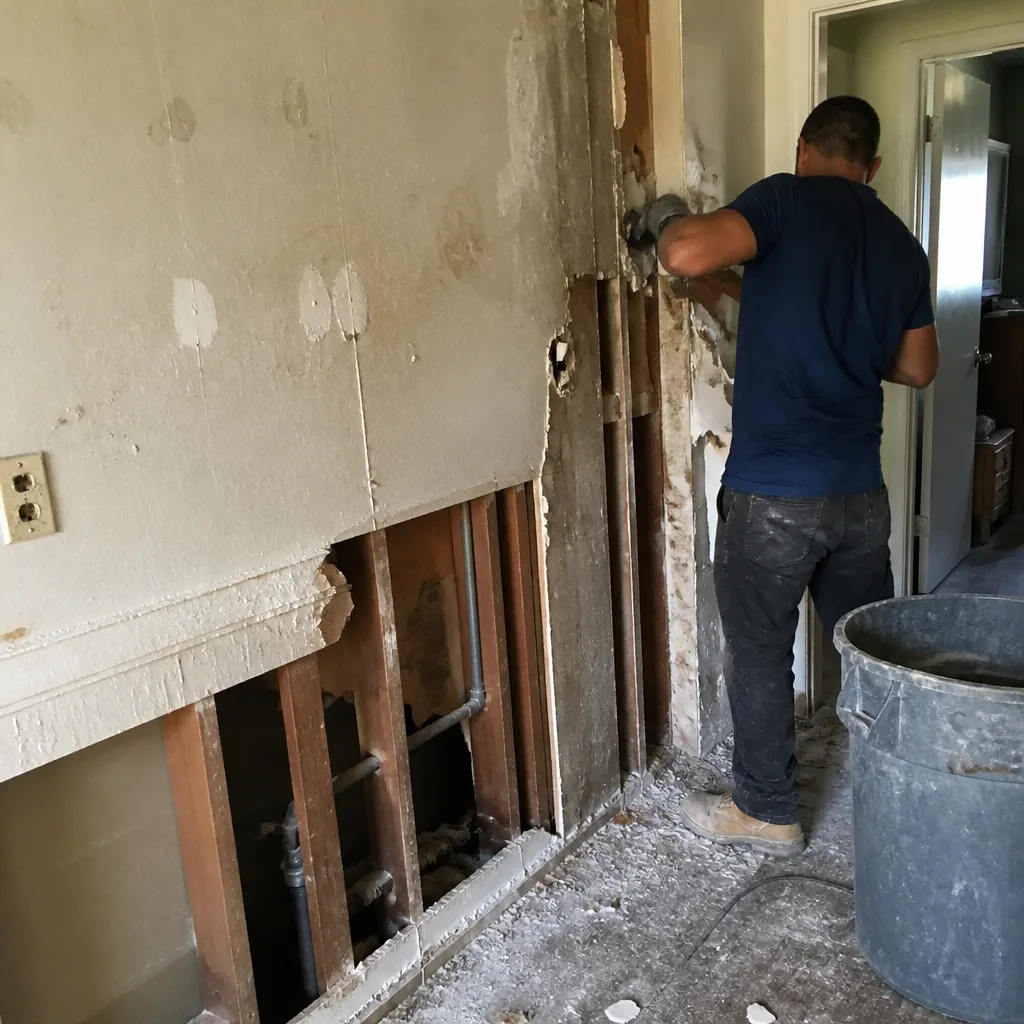 Before
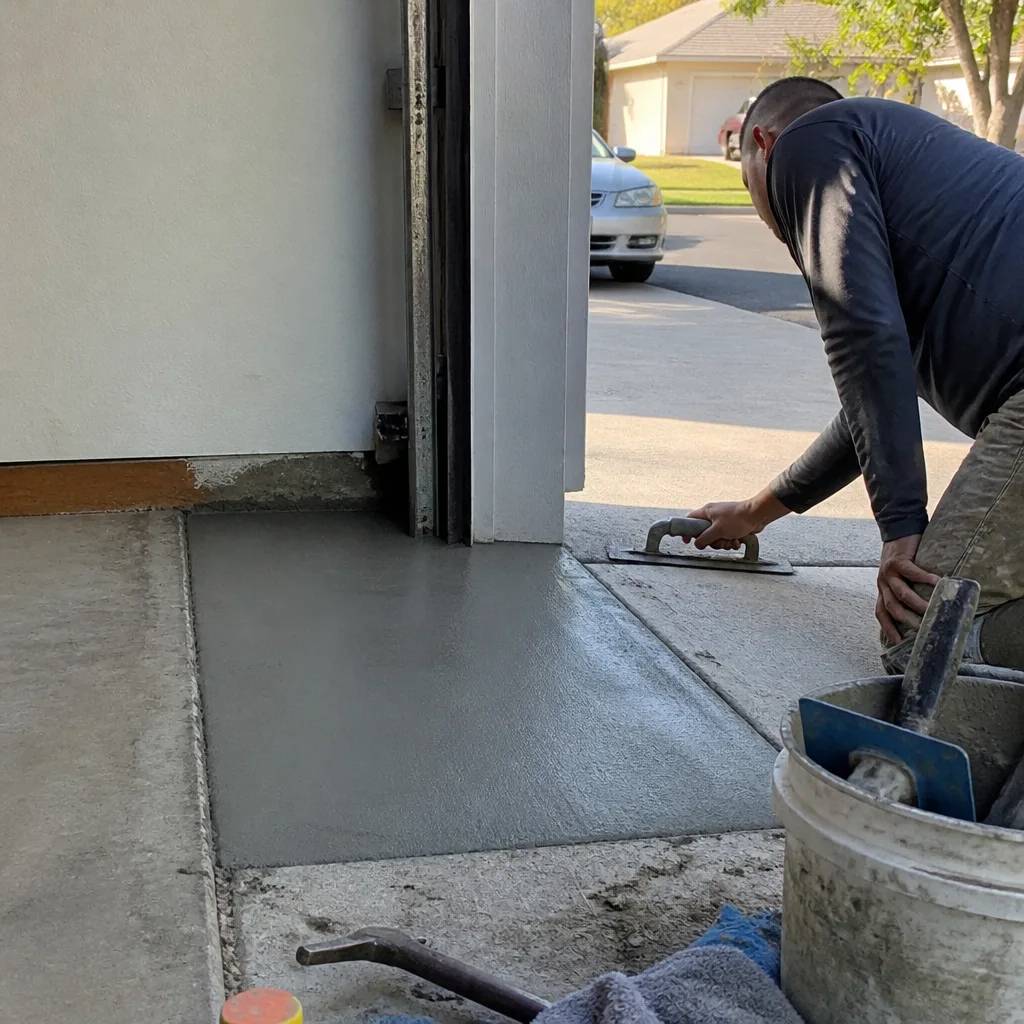 After
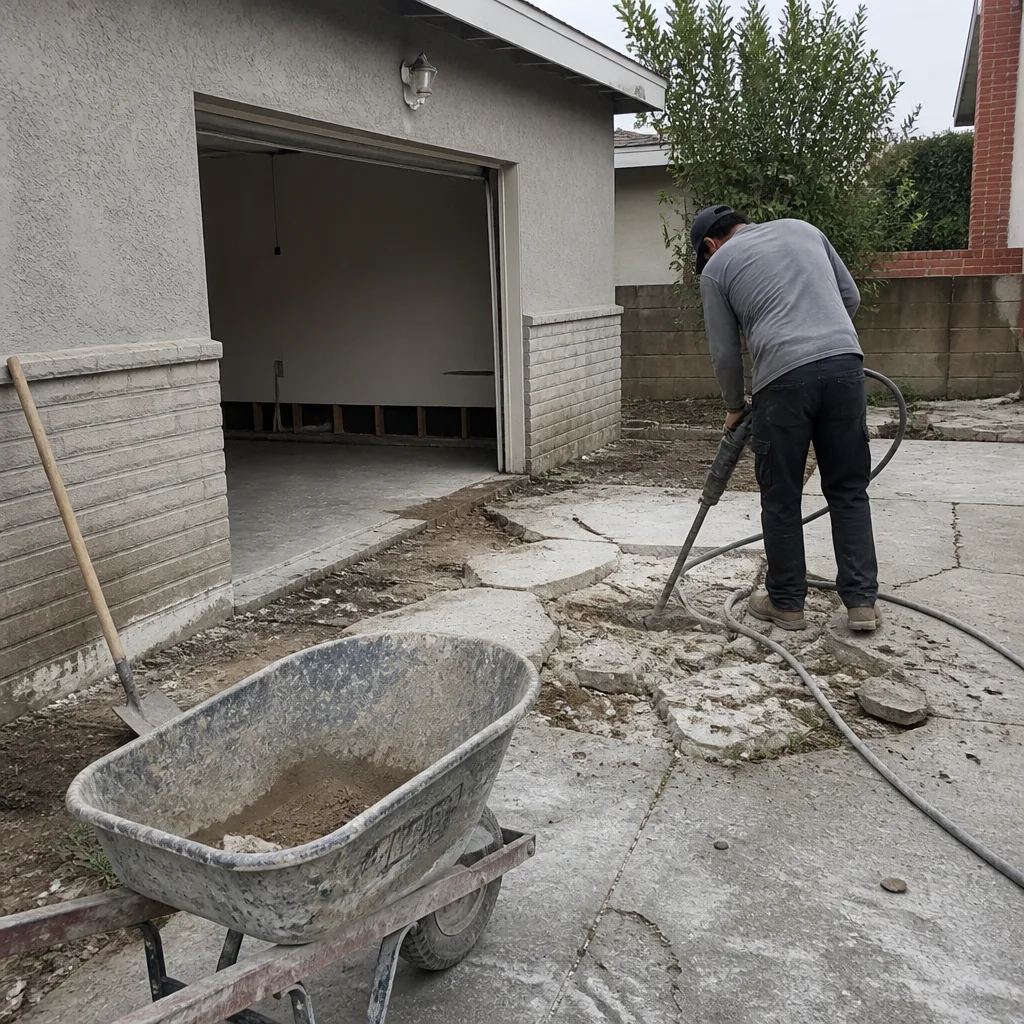 Before
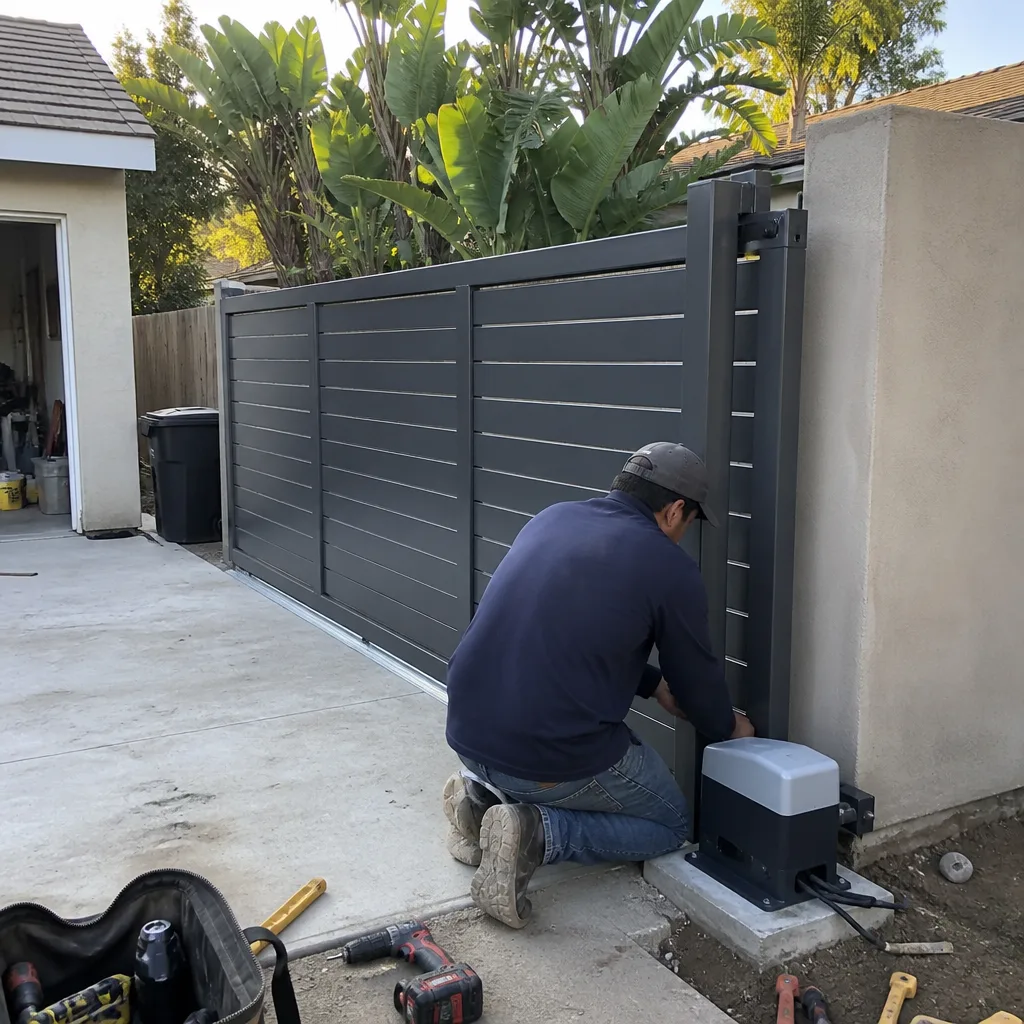 After
 Before
 After
Material Substitution: How to Spot It and Stop It
Material substitution is the quiet overrun. Your contract says “James Hardie siding” and the truck delivers a lesser fiber cement. Your bathroom quote says “Grohe fixtures” and the plumber installs a house brand. Your window order specifies impact-rated PGT and the installed units are unrated. The contractor pockets the difference between what you paid for and what you received.
It happens because most homeowners never see the material invoices. They see the installed product, which often looks close enough if the label is not checked. Here is how to protect yourself.
- Write exact brand names and model numbers into the contract. “Carlisle wide-plank white oak, 5-inch, matte finish” is binding. “Hardwood flooring” is an invitation to substitute.
- Ask for material submittals before installation. A material submittal is a spec sheet or cut sheet for the exact product ordered. Reputable contractors provide these as a matter of course. If your GC cannot produce them, ask why.
- Check the packaging. Branded materials arrive in branded packaging. Kampala windows arrive in Kampala boxes. If the crew shows up with unmarked boxes, photograph them and ask for the purchase order.
- Verify model numbers on installed fixtures. A Grohe shower valve has a model number stamped on it. A Toto toilet has the model on the tank. Five minutes with a phone flashlight confirms what was actually installed.
In Santa Ana’s competitive remodeling market, we see this most often on jobs bid by contractors who undercut the market by 20% or more. A legitimate contractor buying named-brand materials cannot hit those numbers. The substitution is the only way the math works. Your materials, our craftsmanship is not a slogan here, it is a contractual obligation, and the contract should spell it out product by product.
Payment Schedules That Protect You From the Start
Most contractor payment problems start with the payment schedule. The worst schedules are front-loaded: a large deposit, big early draws, and a small final payment. That structure gives the contractor most of the money before most of the work is done, which is exactly the incentive structure that produces abandonment and cost overrun disputes.
A protective payment schedule has these features:
- Deposit capped at 10% or $1,000, whichever is less. California law limits deposits for home improvement contracts to the lesser of 10% of the contract price or $1,000. Some contractors ask for more. That is a Contractors State License Board violation, plain and simple.
- Draws tied to completed milestones, not calendar dates. “25% upon rough inspection passing” is a milestone. “25% on the first of the month” is a handout. The milestone schedule pays for work that exists, not work that is promised.
- A final payment of at least 10%, payable only after final inspection passes and the punch list is complete. This is your holdback. It is the only reason a contractor returns to fix the crooked tile or the misaligned cabinet door.
- Written lien waivers from the GC and any paid subs with every draw. We covered this earlier. It bears repeating because the lien risk in California is real and the paperwork is easy to get if you demand it.
In our Santa Ana practice, we structure payment schedules this way as a matter of course. It protects the homeowner and it keeps the project honest. A contractor who objects to a 10% holdback or to milestone-based draws is telling you something important about how they manage money.
Common Mistakes to Avoid
- Hiring the lowest bid without reading the scope of work. Low bids are low for a reason. The scope is usually thinner than the other bids: fewer allowances, cheaper materials, fewer line items. The low bidder knows he will recover the difference in change orders once you are too committed to walk away.
- Paying for work that has not been completed. In California, a contractor cannot legally demand payment for work not yet done. If you are being asked to pay ahead of the milestone, the contractor has a cash flow problem. Your payment is not the fix for that. Hold the draw.
- Making verbal change order approvals. In court or with the CSLB, if it is not written and signed, it did not happen. Every change, every added scope, every “while you’re here” request needs a written change order with a price before work starts.
- Not documenting the job site weekly. A 90-second walkthrough video every Friday creates a record that is invaluable if a dispute arises. You do not need professional quality. You need consistency.
- Ignoring early warning signs. A missed phone call is noise. Three missed calls, a subcontractor who tells you he has not been paid, and a framing crew that disappears for two weeks is a pattern. Act on patterns, not single events.
- Firing a contractor without understanding the lien risk. If you terminate the contract, the contractor and any unpaid subs may still have lien rights against your property tied to the value of the work already performed. Get legal advice before you terminate in California.
- Hiring a specialty trade to fix a GC’s mistake. The plumber who fixes the original plumber’s work has no responsibility for the rest of the system. The original contractor’s warranty and the trade’s warranty now both have gaps. Fix problems through the GC, not around them.
When to Call a Professional
Most contractor disputes start as annoyances and become expensive because homeowners wait too long to escalate. If work has stopped for more than a week without a written explanation, call a professional. If you have received a mechanic’s lien notice or a threat of one, call a professional. If the contractor is demanding payment ahead of completed work, call a professional. If a city inspector has red-tagged your project and the contractor is not responding, call a professional. These are not situations where another polite email helps. Framework Contractors offers free estimates in Santa Ana and can assess a stalled, abandoned, or poorly performed project and provide a written scope to bring it to completion. Call (844) 681-3590.
Frequently Asked Questions
Stop calling and start writing. Send a written demand by email and certified mail asking for a written explanation and a revised schedule within 48 hours. If there is no response, file a complaint with the CSLB and hold all further payments. The pattern of silence combined with your documentation is what builds a case for abandonment.
California law caps the deposit on a home improvement contract at 10% of the contract price or $1,000, whichever is less. Any contractor asking for more than that is violating state law. Subsequent payments should be tied to completed milestones and accompanied by written lien waivers.
Yes, but the consequences are complex. You will need to terminate the contract in writing and address the value of completed work, which the contractor is entitled to be paid for. You may face lien claims from subcontractors and suppliers. Get legal advice before terminating, and document the reasons thoroughly first.
Some change orders are legitimate: discovered conditions like rotted framing or outdated electrical that could not be seen before demolition. Others are the contractor recovering from a low bid through allowances and vague scope language. The paper trail tells the difference. A legitimate change order documents a newly discovered condition and is priced line-by-line before work starts.
Check the California Contractors State License Board website by searching the contractor’s name or license number. The license should be active, in the correct classification for the work being performed, and show no recent disciplinary actions. Hiring an unlicensed contractor in California exposes you to significant legal and financial risk, and the CSLB cannot help you if something goes wrong.
Yes. If the general contractor did not pay the subcontractor, that subcontractor can file a mechanic’s lien against your property even though you paid your GC in full. This is why written lien waivers from every paid subcontractor, with every progress payment, are the single most important administrative protection a homeowner has. Call (844) 681-3590 for a free estimate and a consultation on structuring your next project to avoid these risks.
The Bottom Line
The contractor problems that cost Santa Ana homeowners the most money, abandonment, lien claims, cost overruns, schedule collapse, are all visible weeks before they become emergencies. They show up as vague contract language, unreturned calls, undocumented change orders, and payment requests that outpace the work. You can fix most of them early with documentation, contract enforcement, and a willingness to hold a payment when the work does not match the draw. The single best protection is structural: one accountable contractor, one contract, every scope from roof to foundation, and product specifications written by name rather than by category. Framework Contractors home is built on that model. If you are planning a project in Santa Ana, start with a conversation. Call (844) 681-3590.
Written by the team at Framework Contractors, serving Santa Ana since 2015.