

Last updated October 31, 2026
 Kitchen remodeling
 Bathroom remodeling
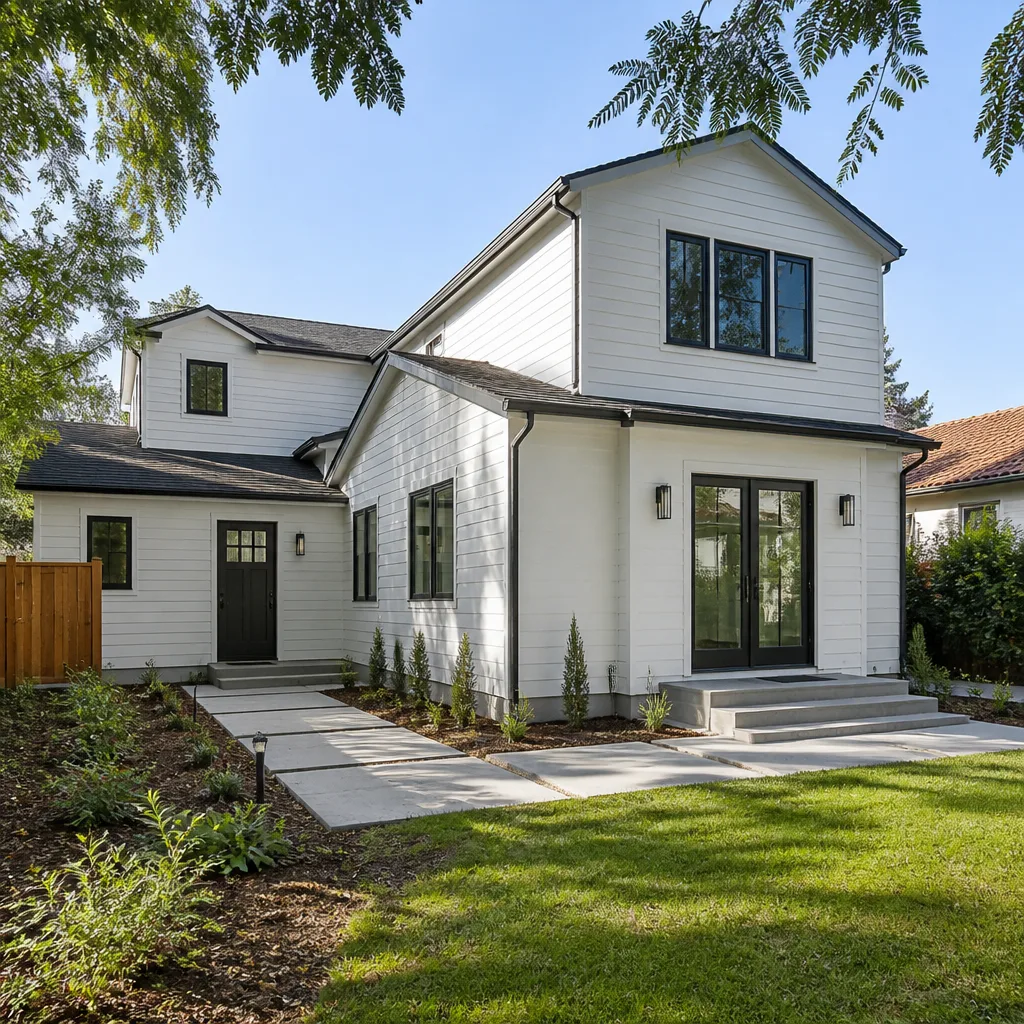 Home additions & ADU
 Roofing
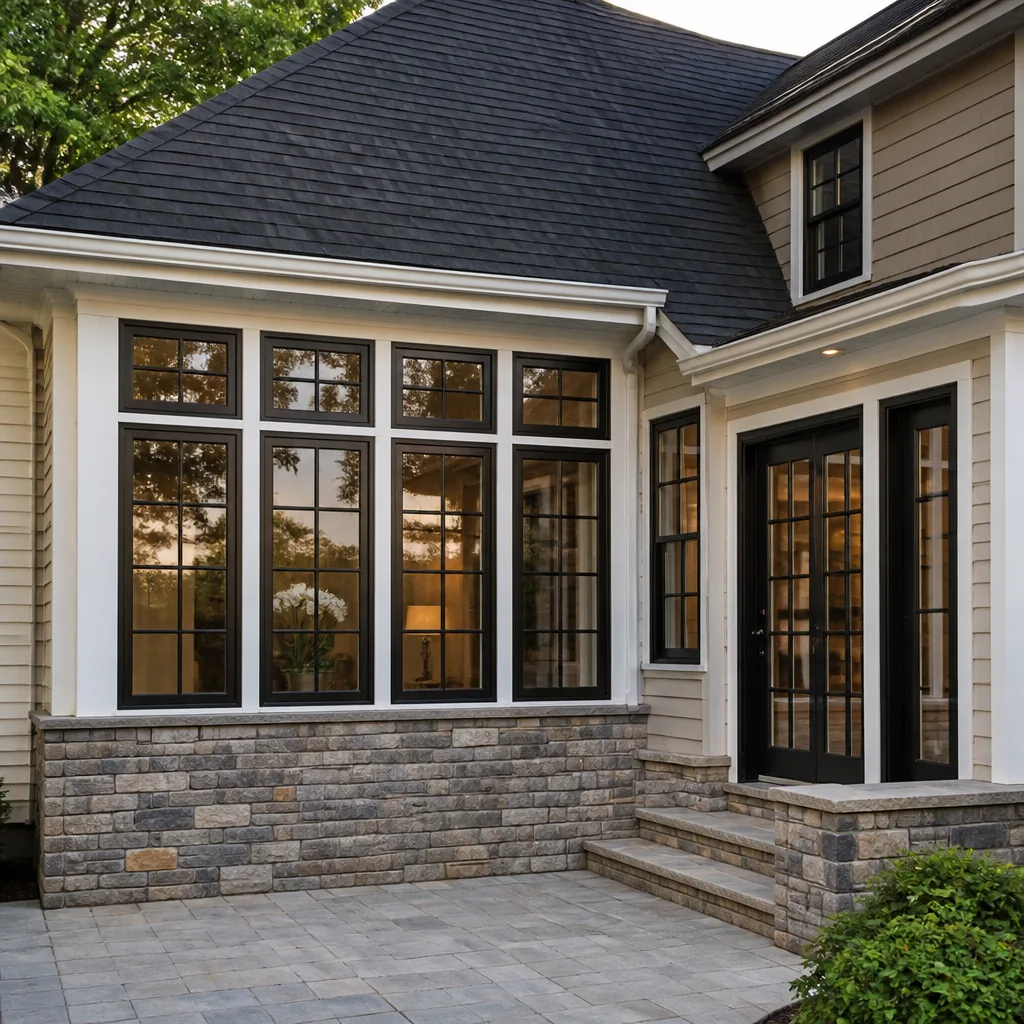 Windows & doors
 Driveway & pavers
 Fence
Free written scope consultation - allowances, timeline, and change-order rules on paper before a single trade is scheduled
How to Hire a Construction Contractor in Santa Ana: A Step-by-Step Guide
The most common hiring mistake Santa Ana homeowners make isn’t skipping license checks. It’s hiring a specialty contractor to manage a multi-trade job, then discovering mid-project that no one is actually accountable for coordination. When a kitchen remodel pulls in a plumber, an electrician, a finish carpenter, and a countertop installer, someone has to own the schedule, the sequencing, and the final result. This guide—along with our Complete General Contractor Guide for Santa Ana Homeowners—walks through how to hire a construction contractor in Santa Ana who can actually carry that responsibility, from reading a CSLB license lookup to spotting contract language that shifts risk onto you.
Styles & brands we work with
Quick Answer
To hire a construction contractor in Santa Ana, verify their California contractor license on CSLB for the specific classification your project requires (typically B-General Building for multi-trade work), confirm they carry general liability and workers’ compensation insurance, get at least three written bids with line-item allowances, and read the contract for lien waiver clauses and payment schedules that don’t front-load risk onto you. The contractor should have verifiable experience in Santa Ana’s specific housing stock, from 1920s California bungalows in Floral Park to 1970s tract homes in Bristol-Warner, as covered in our Seasonal Construction Care for Santa Ana: Year-Round Homeowner’s Guide.
Table of Contents
- License Classifications: What Santa Ana Projects Actually Require
- Reading a CSLB License Lookup: What Matters and What Doesn’t
- The Bid Phase: Questions That Reveal Real Santa Ana Experience
- Subcontractor Relationships: The Layer Most Guides Skip
- Contract Red Flags Specific to Santa Ana Remodel Jobs
- Payment Schedules and Lien Protection: Protecting Your Property
- Permits, Codes, and Santa Ana Inspections
- The Selection Process: A Step-by-Step Workflow
- Common Mistakes to Avoid
- When to Call a Professional
- Frequently Asked Questions
- The Bottom Line
License Classifications: What Santa Ana Projects Actually Require
California contractor licensing is not one-size-fits-all. The state issues separate classifications for general building (B), electrical (C-10), plumbing (C-36), roofing (C-39), and dozens of other specialty trades. A contractor holding a C-39 roofing license is legally authorized to install a roof. They are not licensed to pull a permit for a room addition, reroute plumbing, or move a load-bearing wall. Yet homeowners hire specialty contractors to run multi-trade remodels every week in Santa Ana, and the cracks show up when the framing is done and no plumber is scheduled, or when the inspector flags electrical work that no licensed electrician ever touched.
Here’s what the classifications mean in practice for common Santa Ana projects:
- B – General Building: Authorized for projects involving two or more unrelated trades. Kitchens, bathrooms, additions, ADUs, and whole-home renovations fall here. This is the classification most homeowners actually need.
- C-39 – Roofing: Roof work only. A roofer cannot legally manage a kitchen remodel, no matter how capable they are.
- C-36 – Plumbing: Plumbing systems only. A plumber managing a full bath remodel is doing so outside their license scope if they pull the building permit in their name.
- C-10 – Electrical: Electrical systems only. Same limitation.
- C-54 – Ceramic and Mosaic Tile: Tile work. Tile setters cannot legally coordinate a full bathroom project involving plumbing and electrical.
- Unlicensed handyman: Legal for jobs under $500 including labor and materials, but no permits, no inspections, no insurance-backed recourse. Many handymen run jobs far beyond that limit, and Santa Ana’s Building Safety division will not issue a permit to an unlicensed operator.
For any Santa Ana project that touches multiple trades, a B-General Building license is the baseline. Framework Contractors operates as a licensed general contractor, meaning our projects run under one permit set, one point of contact, and one accountable entity from demolition to final inspection. We’ve seen too many remodels stall because the specialty contractor who sold the job could not legally or practically coordinate the trades that followed their own.
Reading a CSLB License Lookup: What Matters and What Doesn’t
The California Contractors State License Board (CSLB) maintains a free public database at cslb.ca.gov. Enter the contractor’s name or license number and you’ll get a license detail page. Most hiring guides tell Santa Ana homeowners to check this. Almost none tell them what to actually look for. Here’s the breakdown that matters.
License status must read “Active,” not “Active with conditions,” “Suspended,” or “Expired.” An expired license means the contractor cannot legally pull permits in Santa Ana. Some homeowners discover this at the rough inspection, when the permit gets rejected and work stops.
The classification must match the scope of work. If you’re doing a kitchen remodel with plumbing, electrical, and structural work, the license should show “B – General Building Contractor” as the primary classification. A contractor holding only a C-54 tile license has no legal authority to manage that project.
The bond must be current. California requires contractors to post a contractor license bond (currently $25,000 for most classifications). The CSLB page shows bond status. An active bond gives you a recovery mechanism if the contractor abandons the job or violates contractor law.
Check the workers’ compensation insurance field. If a contractor has employees and the workers’ comp field shows “Not required/not applicable,” that means they’re certified as having no employees. That’s fine for a solo operator. But if they claim to run crews and still have no workers’ comp, you are personally exposed if a worker gets hurt on your Santa Ana property. California law makes this your liability.
Look at the business entity and date. A license issued four months ago under a new LLC while the contractor’s previous company has a history of complaints and liens is a pattern worth asking about. Longevity matters less than a clean, stable history.
In our experience reviewing CSLB records for Santa Ana projects, the most common red flag is not an outright suspended license. It’s a specialty classification being used to sell a scope of work far outside its legal coverage. The homeowner doesn’t learn this until the inspector asks who pulled the permit and why the electrical subcontractor’s name isn’t on it. Framework Contractors carries the proper general building classification for full-scope residential remodeling, which means our name goes on the permit from day one.
For homeowners researching broader renovation options, our Home Renovation in Costa Mesa guide covers how the permit and inspection process works across similar Orange County municipalities.
The Bid Phase: Questions That Reveal Real Santa Ana Experience
Any contractor can hand you a number. The bid phase is where you find out whether that number is based on real experience in Santa Ana’s actual building stock or a generic square-footage formula pulled from a national estimating database. Santa Ana is not Irvine. Our homes range from 1920s Craftsman bungalows with balloon framing and knob-and-tube remnants, to 1950s post-war ranch homes with minimal framing and no shear wall bracing, to 1970s and 1980s two-story stucco boxes that predate Title 24 energy codes. A contractor who doesn’t know these differences will price the job wrong and discover it on the back end.
Ask these questions during the bid phase:
- “Have you remodeled homes of this era in Santa Ana before?” A real answer names neighborhoods and specific conditions. “Yes, we’ve done three bungalows in Washington Square in the last two years, and two of them needed full rewire once the plaster came down.” A vague answer means they’re learning on your house.
- “What did your last three Santa Ana projects cost, and what were the change order totals?” Contractors who do this work honestly can tell you how much their projects grew during construction. The national average for change orders is 10-15% of contract value. If they claim zero change orders ever, they’re either excluding everything from their bids or lying.
- “What did the Santa Ana permit process look like on your last project here?” Santa Ana’s Building Safety division has its own submittal requirements, plan check timelines, and inspection workflows. A contractor who has never pulled a permit in Santa Ana won’t know whether your project triggers a planning review, a historic review (relevant in French Park and the old downtown core), or a simple over-the-counter permit.
- “Which materials do you typically specify for Santa Ana’s climate and soil conditions?” Santa Ana gets hot, dry summers and occasional heavy winter rains. Exterior work needs proper drainage details and expansion consideration. A contractor who specifies materials and methods for coastal Orange County instead of inland Santa Ana is missing a real distinction.
- “Can I see allowances as line items, and how are overages handled?” This question alone separates professional remodelers from estimate-guessers. Allowances for flooring, tile, and fixtures should be spelled out per square foot or per item, with written terms for what happens when you select something above allowance.
These questions do more than gather information. They tell you whether the contractor has done the kind of job you’re asking for, in the specific conditions of Santa Ana, recently enough that their pricing and process still apply.
Subcontractor Relationships: The Layer Most Guides Skip
Here’s the structural reality that almost no hiring guide addresses: a general contractor is only as good as the subcontractors they control. When you hire a GC for a Santa Ana whole-home remodel, you are indirectly hiring their framing crew, their electrician, their plumber, their tile setter, their drywall finisher, and their painter. The GC’s license is your legal shield. The subs’ competence is your actual outcome.
Ask during the bid phase:
- “Who is your electrical subcontractor, and how long have they worked with you?” A GC with revolving-door subs is a management risk. Long-term sub relationships mean the GC has leverage to fix problems. Short-term ones mean you might see a new crew every week, with no one taking responsibility.
- “Are your subs licensed and insured independently, or covered under you?” Both is ideal. The sub carries their own workers’ comp and liability, and the GC’s insurance also covers them as an additional insured. A GC who says “it’s all under our policy” should be able to show certificates of insurance naming the subs.
- “Do your subs pull their own permits or work under yours?” In most Santa Ana remodel scenarios, electrical, plumbing, and mechanical work requires the sub’s license on the permit or a separate permit pulled by the sub. A GC who says “we handle all permits under our license” is either unaware of current practice or simplifying past the truth.
- “What happens when a sub doesn’t show up?” The honest answer involves schedule padding, backup subs, and lost days that the GC absorbs. If the contractor says it never happens, they haven’t done many remodels.
- Define your scope in writing. Before calling anyone, write down what you want done. Rooms, square footage, specific materials if you know them, approximate budget. A two-page scope document prevents contractors from bidding on three different jobs and lets you compare apples to apples.
- Identify the license classification you need. Multi-trade remodel: B-General Building. Single trade: the corresponding C classification. This filters your candidate list before you spend a minute on phone calls.
- Build a list of 3-5 candidates. Sources that work: referrals from neighbors in Santa Ana who’ve remodeled recently, CSLB’s “Find a Licensed Contractor” tool, and local trade organizations. Avoid lead-generation websites that sell your information to whoever pays.
- Run CSLB license checks on all candidates. Check status, classification, bond, workers’ comp, and complaint history. This takes fifteen minutes for five contractors. It’s the cheapest due diligence you’ll ever do.
- Conduct site visits with each contractor. Walk the project with them. A contractor who doesn’t open the crawlspace, check the panel, or look at the foundation before quoting is guessing. In Santa Ana’s older housing stock, the crawlspace and the electrical panel often hold surprises that should be in the bid or flagged as potential contingencies.
- Request written bids with matching scope. Each bid should break out labor, materials, allowances, and permits. If one bid is $20,000 lower than the others, it’s not a deal. It’s a scope difference hiding in the line items.
- Check references from recent Santa Ana projects. Ask for references from jobs completed in the last 12 months, not five years ago. Schedule a call with each reference. Ask about schedule slippage, change orders, communication, and whether they would hire the contractor again.
- Review the contract clause by clause. Use the red flag list above. If the contract includes vague allowances, no lien waiver process, or front-loaded payments, negotiate or move on.
- Verify insurance certificates. Ask for certificates of insurance naming you as additionally insured for the project duration. The certificates should come directly from the insurance agent, not from the contractor’s files.
- Sign, set the schedule, and confirm permit plan. Before any work starts, you should have a signed contract, a defined schedule, a confirmed permit plan with Santa Ana Building Safety, and a clear understanding of who you call with questions. If all of that exists, you’ve hired the right contractor.
- Hiring a specialty contractor for a multi-trade remodel. This is the root cause of most Santa Ana remodel failures. A roofer cannot legally coordinate a kitchen remodel, and pretending otherwise only works until the inspector shows up.
- Skipping the CSLB check because the contractor “seemed professional.” Licenses can be expired, suspended, or in the wrong classification. The CSLB database is free and takes two minutes. Use it.
- Choosing the lowest bid without comparing scope. Lower bids almost always mean excluded work, lower-grade materials, or thinner margins that lead to corner-cutting. Compare line items, not bottom lines.
- Paying large deposits up front. California law caps deposits at 10% or $1,000, whichever is less. A contractor asking for more is either breaking the law or doesn’t know it. Neither is acceptable.
- Skipping permits to save a few hundred dollars. Unpermitted work follows your property. When you sell, it becomes your problem to resolve. The inspections exist to protect you.
- Not getting lien waivers. You can pay your contractor in full and still face a mechanics lien from an unpaid sub. Waivers are your proof of payment protection. Demand them.
- Rushing the reference check. A ten-minute call with a past client tells you more than any marketing material. Ask about schedule, changes, communication, and whether they would hire again.
This is where the single-source model earns its value. When one general contractor manages the entire project, the subs answer to that contractor, not to you. You don’t call the plumber when the drain is roughed in wrong. You call the GC, and the GC makes it right. That accountability structure is the point of hiring a general contractor in the first place. Framework Contractors maintains a single-contract, single-point-of-contact structure for exactly this reason. Our General Contractor in Costa Mesa page explains how that approach applies across cities with different inspection rhythms – Santa Ana, Costa Mesa, and the surrounding Orange County communities.
Contract Red Flags Specific to Santa Ana Remodel Jobs
Most contract advice is generic: read the fine print, don’t sign under pressure. Here’s the Santa Ana-specific version. Some clauses appear in contracts from contractors who work all over Orange County but haven’t adjusted for how this city actually operates. These are the clauses to flag.
Vague allowance language. If the contract says “flooring allowance: $2,000” without specifying square footage, material type, or what’s included, you’ve just signed an open check. We see this most often in kitchen remodels where the homeowner later discovers the allowance covers only the tile, not the underlayment, not the trim, not the transition strips. Allowances should be specific: “Allowance for 650 SF of porcelain tile, installed, including mortar, underlayment, and grout, at $8/SF. Client selections above $8/SF billed as change order at cost plus 10%.”
Missing lien waiver language. California property owners can be held liable for unpaid subcontractors and material suppliers even after paying the GC in full. That’s the mechanics’ lien system, and it’s alive and well in Orange County. Your contract should state that the contractor will provide unconditional lien waivers from every sub and supplier upon each payment. If the contract doesn’t mention lien waivers at all, walk away. A contractor working in Santa Ana who doesn’t understand lien protection is not a contractor you want on your property.
Payment schedules front-loaded toward the contractor. A deposit of 10% or $1,000, whichever is less, is the legal maximum for home improvement contracts in California. After that, payments should track work completed, not calendar dates. A contract that asks for 30% at signing, 30% at demo, and 30% at rough framing leaves you exposed if the contractor walks. In Santa Ana, where many projects are older homes requiring unforeseen remediation once walls open up, a contractor wanting heavy early payments is a major warning sign.
No change order process defined. Remodels change. That’s not a flaw. The flaw is a contract that doesn’t define how changes get priced, approved, and documented. Every change should be a written document with a price, signed by you before the work proceeds. If the contract is silent on this, the contractor decides later what counts as a change and what it costs.
No completion date or schedule. A contract without a defined schedule is a contract without accountability. You should see a projected start date, milestone dates for major phases, and a target completion date. Delays happen, but a baseline schedule gives you recourse. Contractors who won’t commit to any dates are telling you something about their current workload and their willingness to manage it.
For more detail on what full-scope remodeling involves, see our Home Remodeling in Costa Mesa page, which walks through the scope decisions that affect contract structure and pricing.
Payment Schedules and Lien Protection: Protecting Your Property
California law gives you specific protections. Most Santa Ana homeowners don’t know they exist until something goes wrong. Here’s how to use them.
Deposit limits. For home improvement contracts, the down payment is capped at 10% of the contract price or $1,000, whichever is less. If a contractor asks for $15,000 down on a $150,000 remodel, they’re either ignorant of the law or counting on you being ignorant. Neither is acceptable.
Progress payments tied to milestones. Structure payments to match completed, inspectable work. A reasonable schedule for a kitchen remodel in Santa Ana might be: 10% at signing, 20% at completion of demolition and rough framing, 20% at completion of rough plumbing and electrical, 20% at completion of drywall and flooring, 20% at completion of cabinetry and countertops, and 10% at final inspection and punch list completion. Each payment follows work you can see and verify, not a calendar date.
Mechanics lien protection through waivers. Before each payment, the contractor should provide conditional lien releases from all subcontractors and suppliers for the work covered by that payment. After payment, those convert to unconditional releases. This process is standard practice in Orange County. A contractor who resists or doesn’t understand conditional vs. unconditional releases should be avoided.
Preliminary notices. In California, subcontractors and suppliers must send you a preliminary notice (commonly called a “pre-lien”) within 20 days of first furnishing labor or materials to your property. If you’re receiving preliminary notices from subs you’ve never heard of on a project you’re managing through a GC, that’s normal. Don’t panic. But do keep them. They define who has lien rights on your property.
The payment process is where the structural difference between contractor types matters most. With a specialty contractor running a multi-trade job, you end up making payments to multiple parties with no one coordinating lien releases. With a GC, one contract means one payment stream and one accountable entity for lien waivers.
Permits, Codes, and Santa Ana Inspections
Santa Ana is its own city with its own Building Safety division. Permits, plan checks, and inspections are processed through the city, not through Orange County. That distinction matters because requirements differ from neighboring municipalities like Costa Mesa, Tustin, or Garden Grove.
What triggers a permit in Santa Ana? Structural changes, electrical work, plumbing alterations, window replacements (when changing size or type), roof replacements, water heater replacements, HVAC changes, and any addition or ADU. Cosmetic work, like painting or flooring replacement, typically doesn’t require a permit. But when in doubt, call the Building Safety division and ask. The counter staff at Santa Ana City Hall can tell you whether your scope needs a permit, and the answer is free.
Here’s the counterintuitive part: the permit protects you, not the contractor. A permitted project means the work is inspected at key stages by a city inspector who works for Santa Ana, not for the contractor. If framing is undersized, the inspector flags it. If electrical work is not code-compliant, the inspector fails it. The permit record also stays with the property, which matters when you sell. Unpermitted work can derail a Santa Ana home sale years after the contractor is gone.
Contractors who suggest skipping permits “to save time and money” are asking you to absorb legal and financial risk so they can avoid inspections. The money you save is measured in hundreds or thousands of dollars. The risk you accept is measured in the full value of the work, and potentially the marketability of your home. That trade never makes sense.
Framework Contractors pulls permits on every project that requires them, and our work is built to pass inspection the first time. From the Framework Contractors home page, you can see the full scope of services we handle under permit in Santa Ana and the surrounding Orange County cities.
The Selection Process: A Step-by-Step Workflow
If you’re starting from zero, here’s the full process of hiring a construction contractor in Santa Ana, in order. Each step builds on the one before it, and skipping steps is where most homeowner horror stories begin.
The entire process, done right, takes two to four weeks from first phone call to signed contract, plus whatever time Santa Ana’s plan check schedule requires. Rushing it because you want to see a new kitchen by Thanksgiving is how avoidable mistakes happen.
Common Mistakes to Avoid
When to Call a Professional
Some Santa Ana homeowners try to act as their own general contractor, hiring subs directly and coordinating the project themselves. For paint-and-flooring scopes, that can work. For any project involving framing, electrical, plumbing, permit drawings, or structural work, it’s a serious risk. The mistakes that owner-builders make usually become visible at inspection, and fixing them costs more than the GC’s management fee would have. If your project touches more than two trades, requires a permit, or will displace your family from the home during construction, call a licensed general contractor. See Choosing the Right Construction Brand: A Buyer’s Guide for Santa Ana for what to evaluate. Framework Contractors offers free estimates in Santa Ana, and we’re a single point of accountability from initial scope through final inspection. Call (844) 681-3590 to schedule yours.
Frequently Asked Questions
A B-General Building license from the California Contractors State License Board is required for any remodel involving two or more unrelated trades. That covers the vast majority of whole-home renovations in Santa Ana, including kitchens, baths, additions, and ADUs. Verify the classification on the CSLB license lookup before signing anything.
Visit cslb.ca.gov and enter the contractor’s name, license number, or business name in the license lookup tool. Confirm the license status reads “Active,” the classification matches your project scope, the bond is current, and workers’ compensation insurance is listed if the contractor has employees. Call (844) 681-3590 if you’d like help understanding what your specific project requires, or browse more guides & resources.
For home improvement contracts, California law caps the down payment at 10% of the contract price or $1,000, whichever is less. Any contractor asking for more than that before starting work is violating state contractor law. All remaining payments should be tied to completed milestones.
Most bathroom remodels in Santa Ana require a permit, because the typical scope involves plumbing fixture relocation, electrical work, or changes to the shower waterproofing. The only bathroom work that typically avoids permits is surface-level replacement like painting, hardware swaps, or replacing a fixture without moving any plumbing. When in doubt, ask the Building Safety division directly.
Older neighborhoods like Floral Park, Washington Square, and French Park have homes from the 1920s through 1950s with balloon framing, older electrical systems, and foundations that have settled over decades. These homes often require more contingency budget for discovered conditions than newer tracts like those in the Bristol-Warner area. A contractor with genuine Santa Ana experience will price for these realities rather than hiding them until demo day. For a free estimate on your specific property, call (844) 681-3590.
That depends on scope. For single-trade work like roof replacement or window installation, a licensed specialty contractor is appropriate. For any project involving multiple trades, a general contractor is the right call because that contractor coordinates all work, pulls the master permit, manages the subs, and carries contractual accountability for the final result. Hiring individual subs puts that coordination burden on you, which is a full-time job you’re not trained for.
The Bottom Line
Hiring a construction contractor in Santa Ana is less about finding the cheapest bid and more about finding the right structure for your project’s complexity. Verify the license classification matches the full scope. Read the CSLB record for status, bond, and workers’ comp. Ask bid-phase questions that reveal genuine Santa Ana experience in our specific housing stock. And read the contract for the four red flags that put risk on you: vague allowances, missing lien waivers, front-loaded payments, and absent change order processes. When those boxes are checked, you’ve hired a contractor who can actually deliver from the roof down to the foundation.
Written by the team at Framework Contractors, serving Santa Ana since 2015.
See the difference
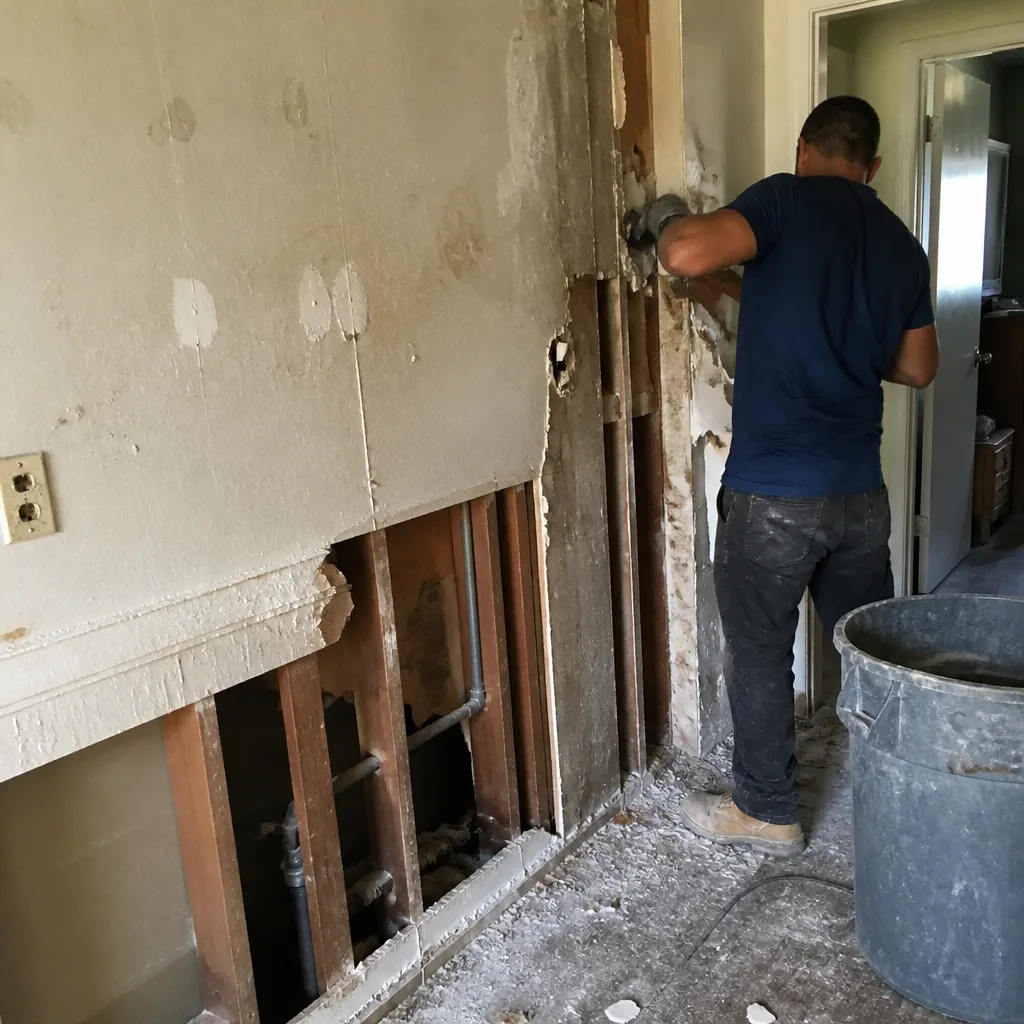 Before
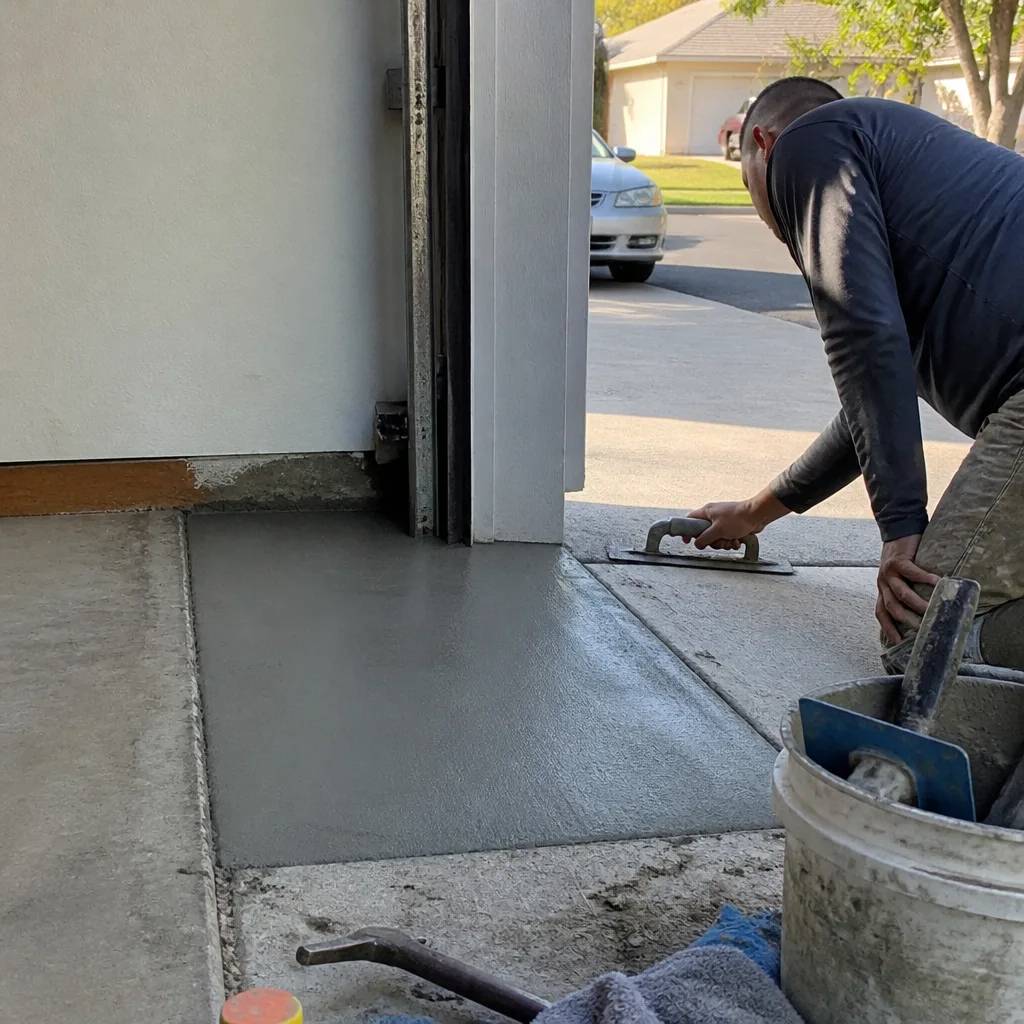 After
 Before
 After
 Before
 After